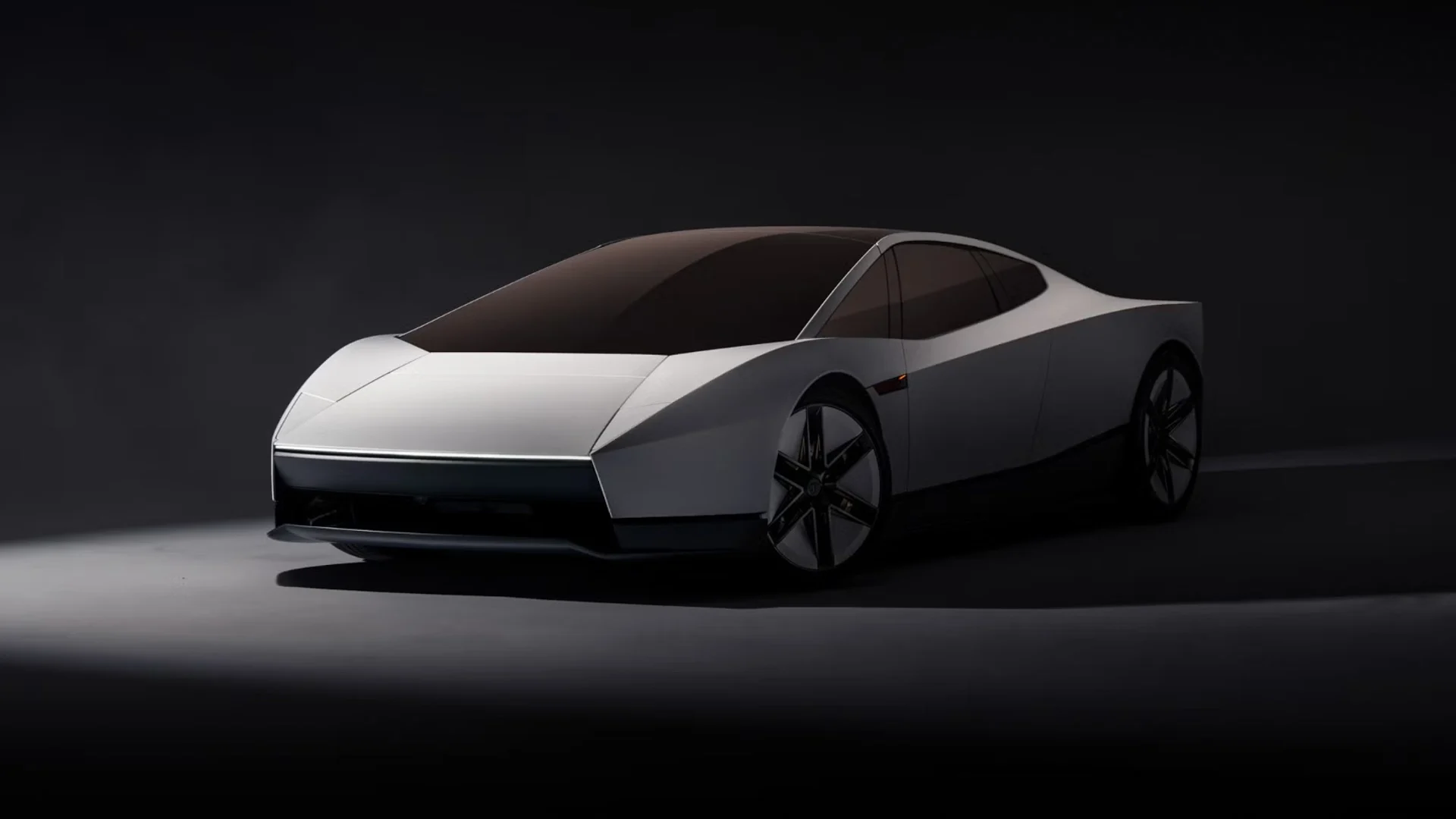
Tesla CEO Elon Musk has unveiled a dramatically redesigned version of the company’s long-awaited Roadster, showcasing a prototype capable of performing aerial stunts using technology developed in collaboration with SpaceX. The demonstration, held at a SpaceX rocket testing facility in McGregor, Texas, on October 15, has reignited interest in the possibility of combining high-performance electric vehicles with rocket-inspired propulsion systems.
During the presentation, the two-seat electric sports car demonstrated a series of unconventional manoeuvres, including travelling up a steep ramp, turning upside down and briefly lifting into the air before executing a flip and landing. The vehicle later used its propulsion system to leap over a row of parked vehicles, highlighting the experimental capabilities Tesla is developing for the next-generation Roadster.
The demonstration also featured an extraordinary acceleration claim. Musk said the Roadster could accelerate from zero to 60 miles per hour in less than one second, a performance level that would place it far beyond conventional production sports cars. However, the claim and the vehicle’s full performance specifications will require further verification as development progresses.
The prototype used a combination of suction technology and a propulsion system featuring 10 nozzles connected to what Musk described as ultra-high-pressure air tanks. These systems were presented as the technology behind the vehicle’s ability to perform brief aerial movements and achieve extreme acceleration. Musk described the project as the outcome of collaboration between Tesla’s automotive engineering expertise and SpaceX’s rocket technology.
The car was operated without a person inside during the demonstration because of safety concerns associated with the experimental system. Musk acknowledged that success was not guaranteed before the test, underscoring the risks involved in showcasing technology that remains at an advanced development stage.
Despite the striking display, questions remain over whether the Roadster will eventually be capable of sustained flight or whether its aerial performance will be limited to short jumps and controlled manoeuvres. The demonstration did not establish that the vehicle could travel long distances through the air or operate like a conventional aircraft.
Experts have highlighted the engineering difficulties involved in creating a vehicle that can function effectively both on roads and in the air. Aircraft generally require lightweight structures and carefully balanced aerodynamic systems, while road vehicles need features such as protective bodywork, bumpers and crash structures. Combining these requirements can create significant challenges involving weight, stability, safety and cost.
California-based start-up Alef Aeronautics is among the companies pursuing flying-vehicle technology. Its developing vehicle uses multiple propellers to achieve lift, illustrating a different engineering approach from the rocket-inspired propulsion system demonstrated by Tesla. However, the wider flying-car sector continues to face challenges related to safe transitions between vertical lift and forward movement, practical operation and regulatory approval.
Tesla has indicated that production of the redesigned Roadster is targeted for 2028. Nevertheless, the company has a lengthy history of revising timelines for the model. The next-generation Roadster was first announced in 2017, but production has yet to begin, making the latest schedule a target rather than a confirmed delivery date. The company has also not demonstrated that every feature showcased in the prototype will be available in the eventual production version.
The Roadster’s unveiling comes as the automotive industry explores new approaches to mobility, including autonomous driving, electric propulsion and electric vertical take-off and landing aircraft. While Tesla’s demonstration offered a glimpse of how rocket-inspired systems might be incorporated into a sports car, the practical use of such technology will depend on further testing, engineering development and regulatory considerations.
For now, the Roadster represents an ambitious experiment at the intersection of automotive and aerospace engineering. Whether it ultimately becomes a commercially available vehicle capable of more than brief aerial stunts remains to be seen.
Image Disclaimer: Pictures used belong to their respective rightful owners.