For years, luxury was loud.
Big logos, flashy branding, designer labels, and statement pieces often symbolized success. The more visible the brand, the more desirable it seemed.
But in 2026, consumer preferences are shifting.
Luxury is becoming quieter.
Instead of oversized logos and obvious displays of wealth, many consumers are leaning toward simplicity, timeless style, and understated elegance.
Think neutral tones, minimal branding, quality materials, and experiences that feel refined without trying too hard.
Welcome to the era of quiet luxury.
And businesses are paying close attention.
What Is Quiet Luxury?
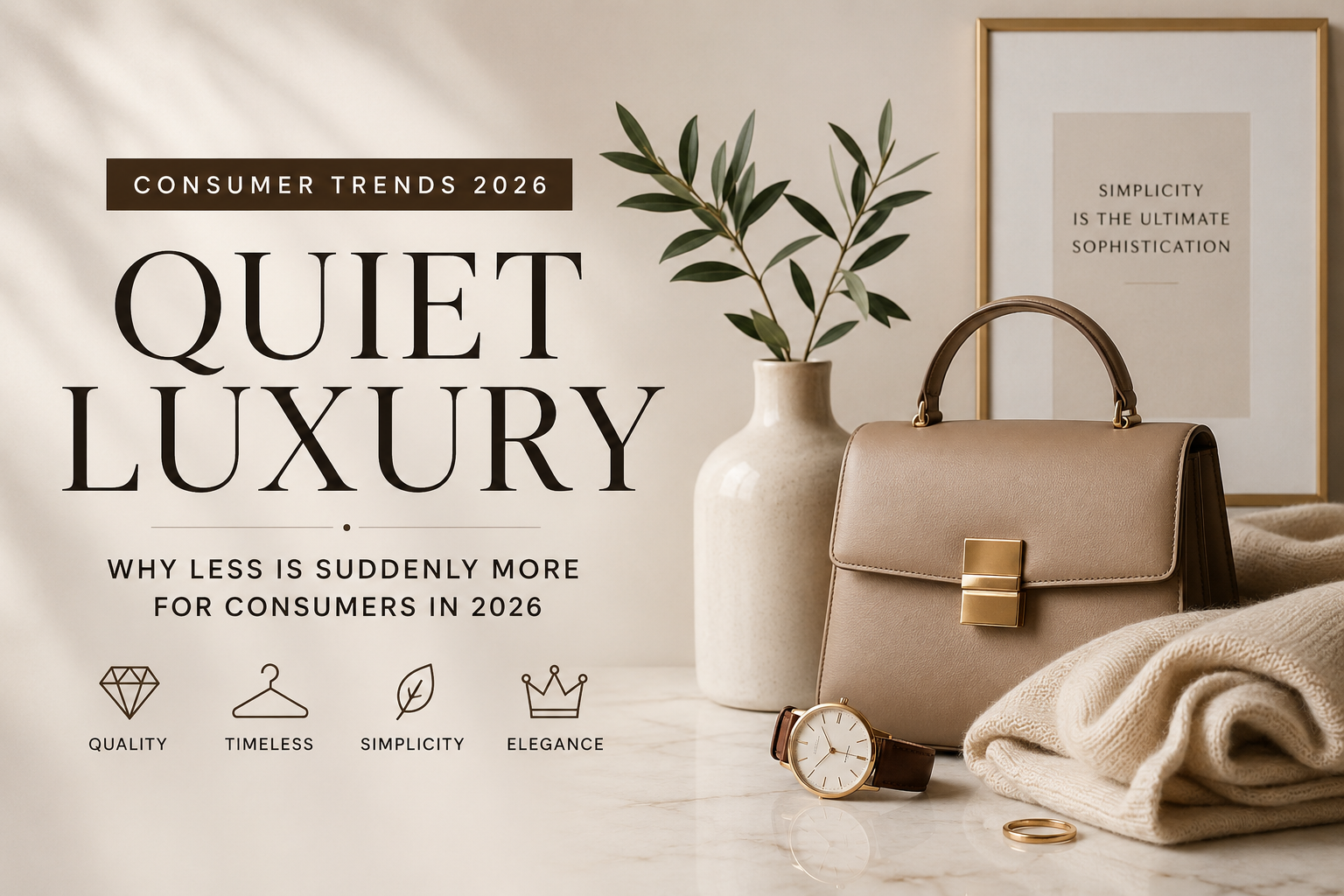
Quiet luxury refers to high-quality products and experiences that feel elegant without appearing overly flashy.
Rather than focusing on status symbols, consumers are increasingly prioritizing craftsmanship, longevity, comfort, and sophistication.
It is the idea that luxury does not need to announce itself loudly.
A perfectly tailored outfit.
A beautifully designed café.
A timeless handbag without oversized logos.
An elegant hotel experience focused on comfort rather than extravagance.
Quiet luxury is less about showing off and more about feeling good.
In many ways, it reflects a growing preference for subtle confidence over obvious status.
Why Are Consumers Moving Toward It?
People Are Choosing Quality Over Quantity
Consumers are becoming more intentional about spending.
Rather than buying multiple fast-fashion pieces or trendy products that quickly lose appeal, many people are choosing fewer, better-quality purchases.
The focus is shifting from more to better.
Consumers increasingly ask:
Will this still feel valuable a year from now?
Longevity matters more than impulse buying.
Social Media Trends Are Changing
Interestingly, social media may have helped popularize quiet luxury.
Minimal aesthetics, neutral interiors, capsule wardrobes, slow living, and elegant simplicity have become increasingly popular online.
Instead of flashy lifestyles, audiences are gravitating toward content that feels aspirational yet calm.
Luxury is starting to look softer.
More refined.
Less performative.
Consumers Want Authenticity
Many people are moving away from excessive consumerism and visible status symbols.
In a world where everyone can post curated lifestyles online, understated elegance often feels more genuine.
People are beginning to associate confidence with simplicity.
Sometimes, subtle feels more sophisticated.
How Businesses Are Responding
Brands across industries are adapting to this shift.
Fashion brands are embracing cleaner designs and timeless collections.
Hotels and restaurants are focusing on calm aesthetics and personalized experiences.
Beauty brands are emphasizing minimalism and premium ingredients.
Even cafés and retail spaces are leaning toward soft interiors, warm lighting, and elevated simplicity.
The message is becoming clear:
Consumers increasingly value experience and quality over excess.
What This Means for Sri Lankan Businesses
For Sri Lankan brands, quiet luxury presents interesting opportunities.
Boutiques, cafés, hotels, salons, wellness brands, and lifestyle businesses can embrace elegant simplicity without needing massive budgets.
Luxury no longer necessarily means expensive.
Sometimes it means thoughtful design, premium service, attention to detail, and creating experiences that feel elevated.
A calm café atmosphere.
Beautiful packaging.
Excellent customer service.
Details matter.
For businesses, quiet luxury can become more about perception than price.
Final Thoughts
Consumer tastes are evolving.
In 2026, luxury is becoming less about impressing others and more about personal experience, quality, and timeless appeal.
The loudest brands are not always winning attention.
Sometimes, the brands saying less are making the strongest impression.
Because in the age of quiet luxury, less may truly be more.