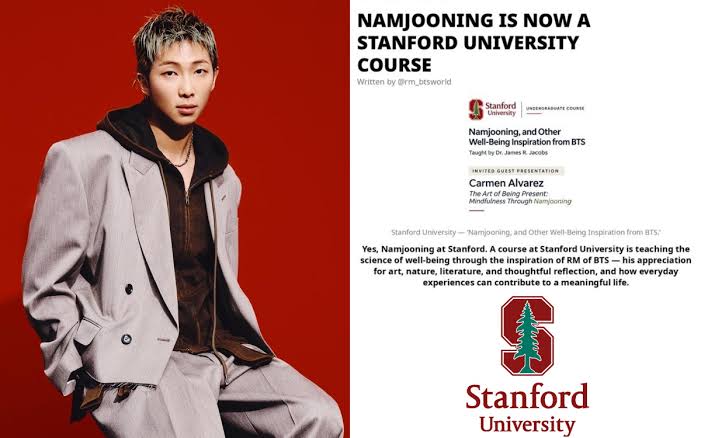
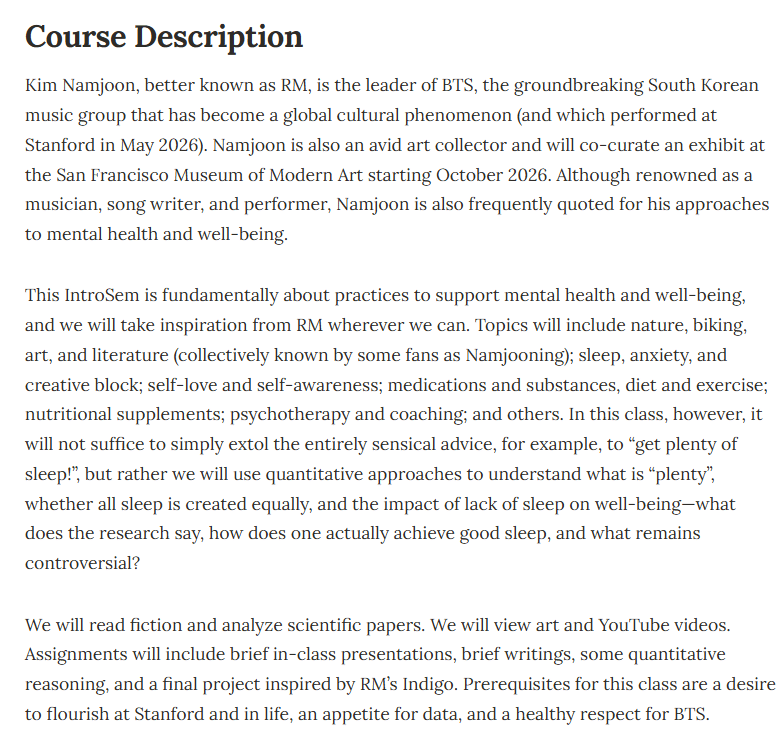
What if taking a walk in nature, visiting an art gallery, reading a book or going on a bicycle ride could become part of a university course on mental health? At Stanford University, these everyday activities are at the centre of an unusual academic offering inspired by Kim Namjoon, globally known as RM, the leader of South Korean sensation BTS.
Titled Namjooning, and Other Well-Being Inspiration from BTS, the course explores mental health, personal development and healthy lifestyle practices through activities commonly associated with RM. Rather than focusing exclusively on the music and cultural influence of BTS, the seminar examines how ordinary experiences, creative interests and personal habits can contribute to a person’s overall well-being.
The announcement has attracted attention from BTS fans, commonly known as ARMY, as well as people interested in the growing relationship between popular culture, education and mental health. It also highlights how RM’s influence extends beyond his career as a musician, songwriter and performer.
What Does ‘Namjooning’ Actually Mean?
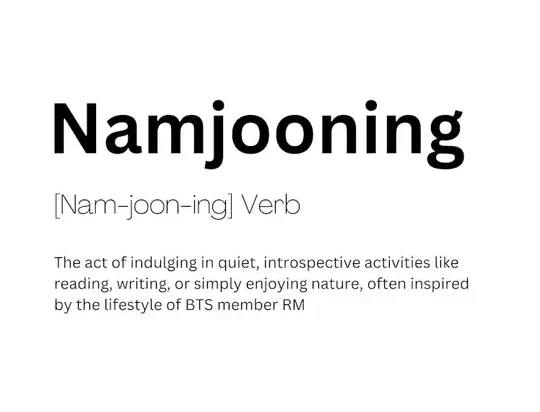
The term Namjooning comes from RM’s real name, Kim Namjoon. Within the BTS fandom, it has developed into a popular expression describing the activities and lifestyle interests that fans associate with him.
These activities include spending time outdoors, visiting museums and art galleries, riding bicycles, reading books and appreciating the world through creative experiences.
For many fans, Namjooning represents something more meaningful than simply copying the hobbies of a favourite celebrity. It reflects the idea of slowing down, finding inspiration in everyday surroundings and making time for personal interests outside the demands of work, studies and social expectations.
RM has frequently shared glimpses of these interests through social media, including photographs from museums, exhibitions, outdoor excursions and moments spent reading. His appreciation for literature, visual art and nature has helped establish an image that differs from the conventional expectations surrounding a global pop star.
Over time, fans have embraced these activities as a way of reconnecting with themselves and discovering new interests. The concept has become particularly meaningful to people who see personal growth, creativity and self-reflection as important parts of everyday life.
Stanford’s decision to build an academic seminar around this idea gives the fan-created concept a new context, connecting it with discussions about psychology, lifestyle habits and evidence-based approaches to well-being.
Stanford’s PSYC 65N: A Different Approach to Mental Well-Being
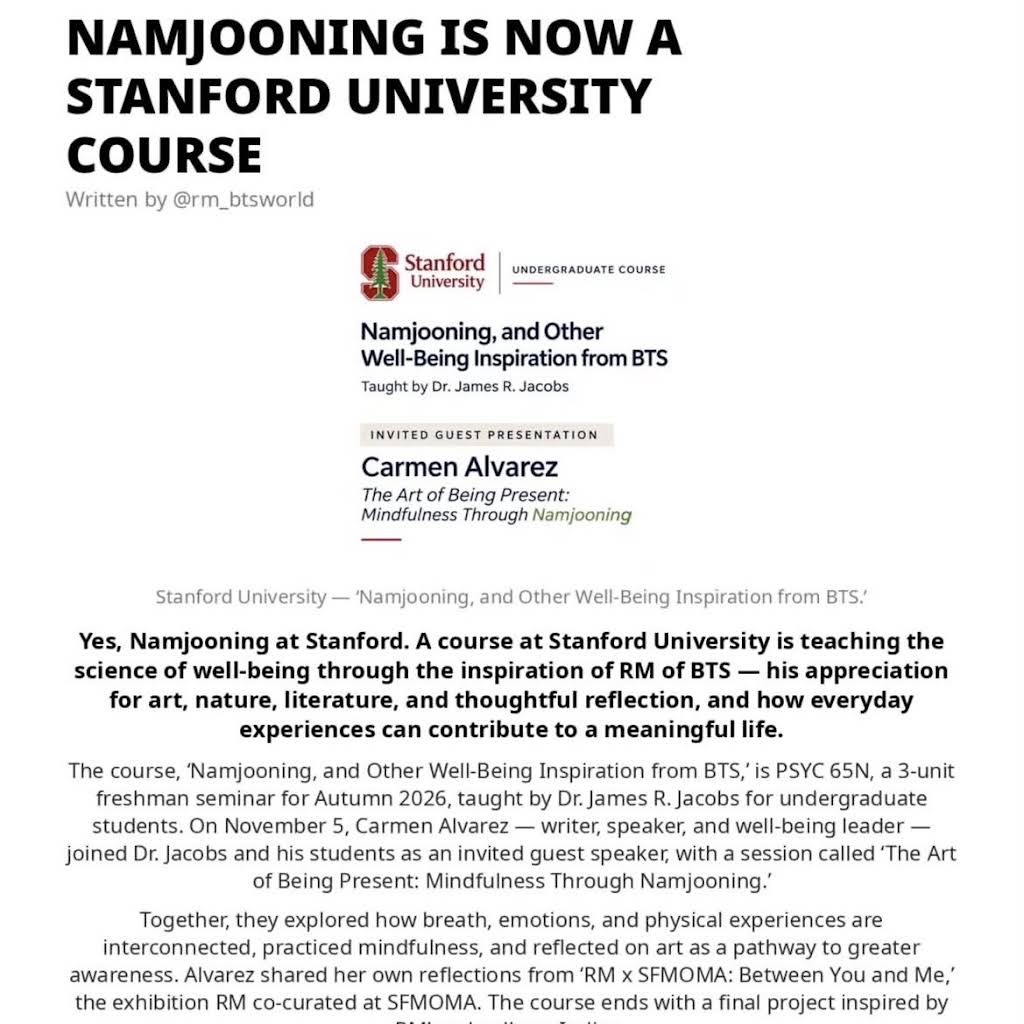
According to Stanford University’s official course catalogue, Namjooning, and Other Well-Being Inspiration from BTS is listed as PSYC 65N, a three-unit introductory seminar offered during the 2026 Autumn academic term.
The course is scheduled to run from September 22 to December 4, 2026, with classes taking place on Mondays and Wednesdays from 4:30 PM to 5:50 PM.
The seminar is designed primarily for first-year undergraduate students, although sophomores and first-year transfer students may also receive consideration depending on availability.
Its central objective is to explore the practices and challenges associated with maintaining mental health and achieving a balanced lifestyle. BTS and RM provide an inspirational starting point, but the academic focus extends well beyond the group’s music or the personal interests of its leader.
Students will examine different aspects of well-being, including physical health, emotional awareness, creativity, sleep, anxiety, diet, exercise and professional mental health support.
The course description makes it clear that students will not simply discuss popular self-care advice. Instead, they will investigate what scientific research actually says, consider how different habits affect people and explore areas where evidence remains uncertain or controversial.
This approach makes the seminar particularly interesting because it combines the accessibility of a familiar cultural concept with the critical thinking expected in university-level education.
From Nature and Art to Sleep, Anxiety and Self-Awareness
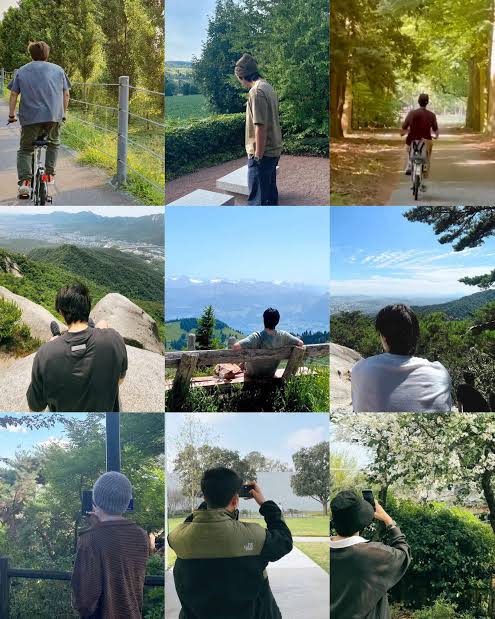
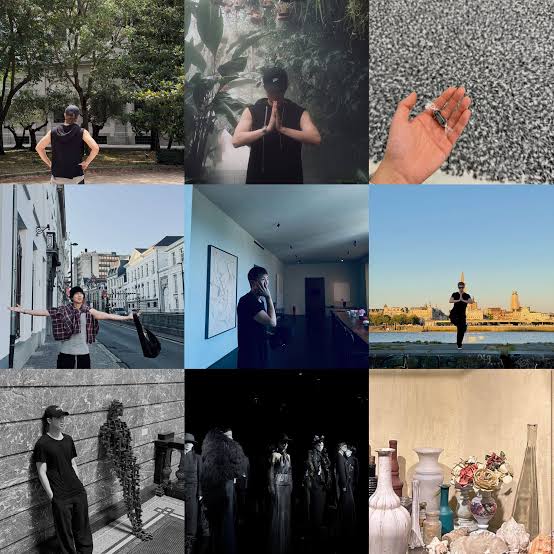
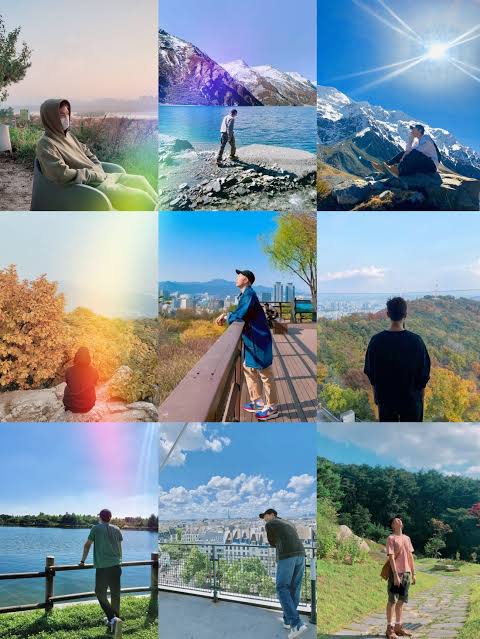
One of the most distinctive features of the course is the range of subjects included in its curriculum.
Nature, cycling, art, literature and journaling form part of the activities associated with Namjooning. However, Stanford’s seminar also explores several broader areas of mental and physical well-being.
Nature and outdoor activities
Spending time in natural surroundings and participating in activities such as cycling are among the central ideas associated with Namjooning. Students will explore these interests as part of a wider discussion about lifestyle and well-being.
Art and literature
RM’s appreciation for visual art and books provides another important inspiration. The course brings creative experiences into discussions about personal development, reflection and mental well-being.
Sleep and anxiety
Sleep is another major subject. Students will examine how much sleep people actually need, whether all sleep provides the same benefits, and how naps fit into healthy sleeping patterns. Anxiety and creative block will also be explored.
Self-love and self-awareness
The seminar will consider how individuals understand themselves, recognise their needs and develop healthier relationships with their own emotions and experiences.
Diet, exercise and nutritional supplements
Students will also examine the relationship between physical health and well-being, including dietary habits, exercise, supplements, medications and substances.
Psychotherapy and coaching
Professional support is another part of the curriculum. The course will introduce discussions surrounding psychotherapy and coaching, providing opportunities to consider different approaches to personal and psychological challenges.
By bringing these subjects together, Stanford aims to encourage students to look at well-being as a combination of interconnected habits, experiences and personal circumstances rather than a single activity or simple lifestyle formula.
Why Stanford Wants Students to Look Beyond Ordinary Self-Care Advice
Perhaps the most interesting part of the course description is its emphasis on scientific evidence.
The syllabus acknowledges that advice such as getting enough sleep is sensible, but argues that simply repeating familiar recommendations is not enough. Students are expected to investigate what these recommendations actually mean.
For example, what counts as enough sleep? Does sleeping for a particular number of hours benefit everyone equally? Are naps useful, and under what circumstances? What does scientific research establish, and which questions remain open to debate?
These questions demonstrate that the seminar is not intended to be a collection of motivational discussions about living a happier life.
Instead, students will use quantitative approaches to understand health and lifestyle recommendations. They will examine scientific findings, interpret information and consider how research can be applied to everyday decisions.
This is particularly relevant in an environment where social media frequently presents simplified advice about mental health, productivity, fitness and personal development. By encouraging students to examine evidence rather than automatically accept popular recommendations, the course places critical thinking at the centre of its approach.
It also recognises that well-being is not identical for everyone. A habit that works for one individual may not produce the same results for another, making research and individual circumstances important parts of the discussion.
What Will Students Actually Do in the Course?
The learning experience will combine academic research with creative and reflective activities.
According to the course information, students will engage with fiction, scientific papers, artworks and YouTube videos. This combination is designed to expose them to different ways of understanding human experiences, emotions and personal development.
The assignments will include short in-class presentations, brief written work and exercises involving quantitative reasoning.
Rather than limiting the subject to traditional lectures and textbook discussions, the course uses different forms of material to encourage students to connect academic ideas with everyday life.
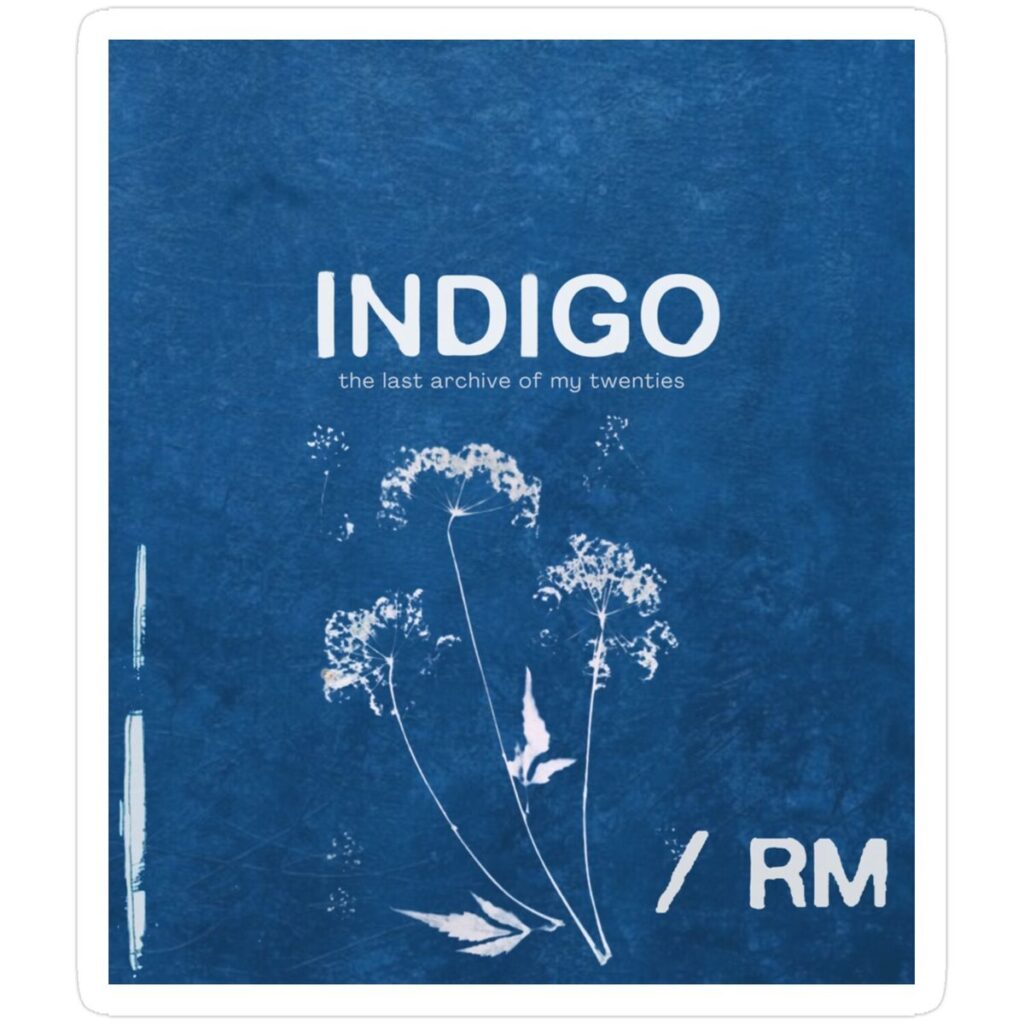
One particularly interesting feature is the final project, which will take inspiration from RM’s solo album Indigo.
Released in December 2022, Indigo is RM’s first full-length solo studio album. The project offers a personal look into his thoughts, experiences and artistic identity during his twenties. Its themes and creative direction make it a fitting source of inspiration for a course exploring self-expression, identity and personal reflection.
Bringing the album into an academic assignment also creates an opportunity to examine how music and artistic expression can communicate emotions and experiences that may be difficult to explain through ordinary conversation.
Who Is Teaching Stanford’s Namjooning Course?
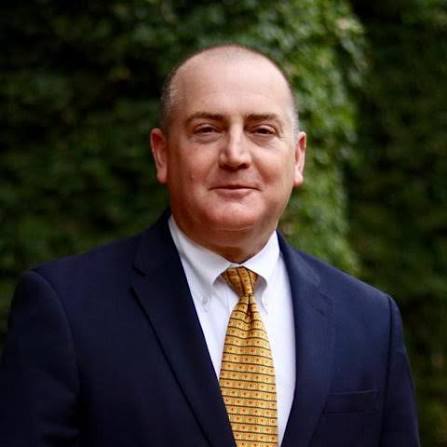
The seminar is led by James R. Jacobs, MD, PhD, an associate professor in Stanford’s Department of Psychiatry and Behavioral Sciences.
Jacobs also serves as Associate Vice Provost for Student Affairs and Executive Director of Vaden Health Center at Stanford University.
His academic and administrative responsibilities connect the course with the university’s broader interest in student health and well-being.
With a background that includes medicine and biomedical engineering, Jacobs brings an interdisciplinary perspective to a subject that involves psychology, physical health, behaviour and lifestyle choices.
His involvement also reinforces the academic purpose behind the course. Although its inspiration comes from a globally recognised music artist, its focus is on examining well-being through research, discussion and practical understanding.
A Prerequisite That BTS Fans Will Appreciate


The course description includes an unusually memorable set of prerequisites.
Students are expected to have a desire to flourish at Stanford and in life, an appetite for data, and a healthy respect for BTS.
The wording has naturally caught the attention of fans because it acknowledges the group’s influence while maintaining the academic expectations of a university seminar.
However, the inclusion of BTS is not simply a promotional detail. The course uses the group’s cultural presence and RM’s personal interests as an accessible starting point for discussions about subjects that can sometimes feel difficult to approach.
For students familiar with BTS, the connection may make conversations about self-awareness, creativity and well-being more engaging. For those who are less familiar with the group, the course still offers an opportunity to explore these subjects through research and academic discussion.
RM’s Influence Extends Beyond Music and Into the Art World
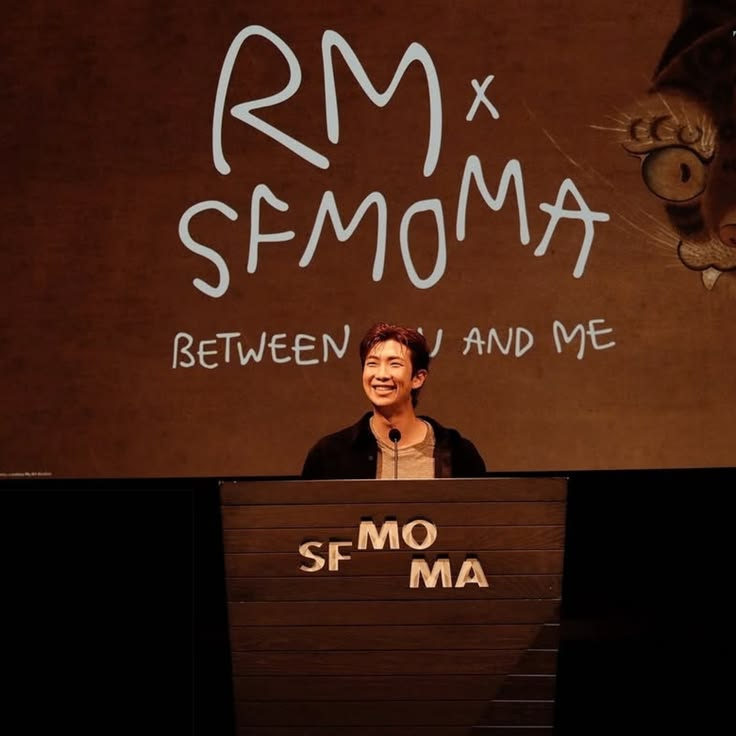
Stanford’s interest in RM’s approach to well-being comes at a time when his influence in the visual arts is also receiving international attention.
In October 2026, RM made his museum curatorial debut through RM x SFMOMA: Between You and Me, an exhibition at the San Francisco Museum of Modern Art.
The exhibition, which runs from October 3, 2026, to February 7, 2027, brings together nearly 150 works from RM’s personal collection alongside pieces from the museum’s collection.
Co-curated by RM, SFMOMA Curatorial Project Manager América Castillo and Assistant Curator of Painting and Sculpture Hyoeun Kim, the exhibition explores connections between Korean modern and contemporary art and works from other parts of the world.
The collection includes works across different artistic forms, including ceramics, calligraphy, painting and sculpture. It also offers visitors a more personal understanding of the art that has influenced RM over the years.
According to SFMOMA, the exhibition reflects a collecting journey that began with museum visits during BTS tours and gradually developed into a diverse personal collection.
This connection between music, art and personal interests helps explain why RM is such an appropriate inspiration for a course built around creativity and well-being. His public identity includes more than performing on stage. It also reflects an ongoing interest in learning, exploring different cultures and finding meaning through artistic experiences.
BTS and the Growing Conversation Around Mental Health

BTS has frequently been associated with conversations about self-acceptance, emotional struggles and personal growth.
Through their music, interviews and public messages, the members have explored themes such as identity, insecurity, loneliness, pressure and the importance of accepting oneself.
For many listeners, these messages have provided a sense of connection during difficult periods. The group’s music has also helped create spaces where fans can discuss personal experiences and find support within a global community.
RM, in particular, has often spoken about personal uncertainty, growth and the challenges of navigating life while working in the public eye. His interests in literature, philosophy and art have also contributed to the way fans understand his approach to self-reflection.
It is important to recognise that artistic inspiration is not a replacement for professional mental health care. Listening to music, spending time outdoors or visiting an art gallery cannot independently address every psychological challenge. However, these experiences can become meaningful parts of a broader approach to maintaining a balanced lifestyle.
Stanford’s seminar appears to recognise this distinction by placing everyday activities alongside discussions of psychotherapy, medications, sleep research and other evidence-based subjects.
When K-Pop Culture Meets Higher Education
The introduction of PSYC 65N represents an interesting example of how popular culture can become a starting point for academic exploration.
Universities have long used music, literature, films and other cultural works to introduce complex subjects. Stanford’s Namjooning seminar takes a similar approach, using the interests associated with one of the world’s most recognised music artists to encourage students to investigate mental health and personal well-being.
For BTS fans, the course is another reminder of the group’s influence beyond entertainment. For educators, it offers an example of how familiar cultural references can make academic discussions more accessible to younger generations.
Ultimately, the course is not about teaching students to live exactly like RM or suggesting that one particular lifestyle guarantees happiness. It is about encouraging them to explore activities that bring meaning to their lives, understand their own needs and make informed decisions based on scientific evidence.
And perhaps that is the most interesting idea behind Namjooning: sometimes, taking a step back from a busy routine, appreciating a piece of art, opening a book or spending an afternoon outdoors can become an opportunity to reconnect with yourself.
With Stanford bringing these ideas into the classroom, a term that began within the BTS fandom is now finding a place in an entirely different world, connecting music, creativity, education and the science of well-being.
Image Disclaimer: Pictures used belong to their respective rightful owners.