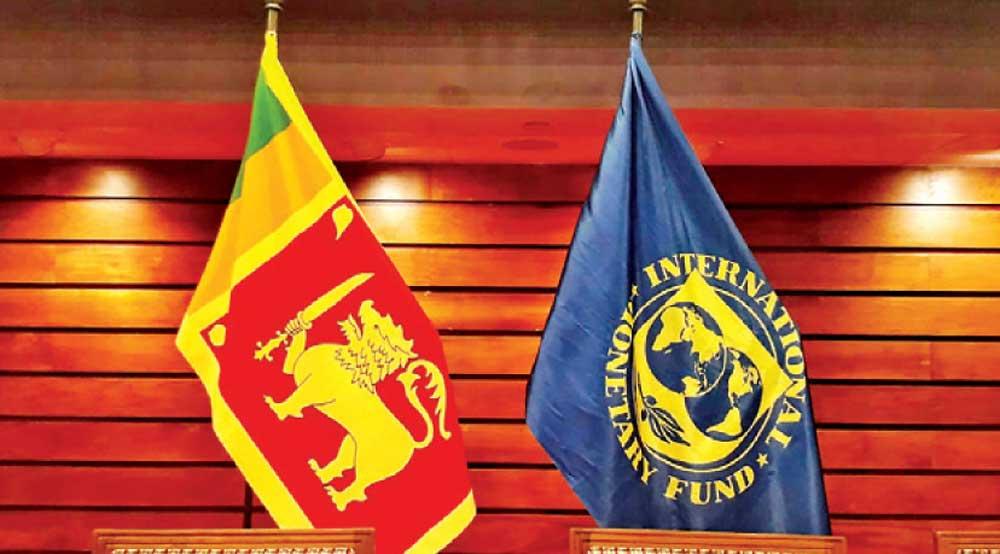
Sri Lanka yesterday reached a staff-level agreement with the International Monetary Fund (IMF) on the seventh review of its bailout programme, moving closer to a further US $ 345 million disbursement.
The final approval is dependent on a programme-consistent Budget 2027 and a review of financing assurances.
The agreement follows the IMF mission’s September 10-23 visit and subsequent virtual discussions with the Sri Lankan officials.
The team in September left the country without a finalisation but affirmed discussion would proceed towards reaching agreement on the parameters and policies needed to conclude the seventh review.
The IMF also concluded discussions for the 2026 Article IV consultation, which assesses the country’s economic policies and outlook.
The IMF said the Executive Board approval was contingent on President Anura Kumara Dissanayake, as the Finance Minister presenting Budget 2027 to Parliament in line with the programme parameters and completion of the financing assurances review.
That review will confirm the multilateral partners’ financing contributions and assess whether adequate progress has been made with debt restructuring.
Once the board completes the review, Sri Lanka would gain access to SDR 254 million, equivalent to about US $ 345 million. This would bring the cumulative disbursements under the arrangement to SDR 2.032 billion or approximately US $ 2.7 billion.
The four-year Extended Fund Facility, approved in March 2023, totals SDR 2.3 billion, equivalent to about US $ 3 billion.
“Sri Lanka’s economy has proved remarkably resilient to successive shocks,” IMF Mission Chief Evan Papageorgiou said.
The IMF acknowledged the economic growth of 4.2 percent in the second quarter of 2026, marking 11 consecutive quarters of strong growth. Headline inflation stood at 8 percent year-on-year in September, while the gross official reserves reached US $ 6.9 billion at end-August.
The banks remained well capitalised and profitable, fiscal performance in the first half was strong and debt restructuring was largely completed, it said.
However, uncertainty over the duration and intensity of the Middle East war, global trade policy and the effects of El Niño continued to pose downside risks.
The IMF called for prudent policies and further reforms to safeguard the stability and sustain the recovery, including a medium-term revenue strategy to support revenue collection, improve tax efficiency and fairness and provide greater certainty to the investors. It also urged the authorities to address the bottlenecks in capital spending, including those affecting the Cyclone Ditwah recovery and reconstruction.
Greater exchange rate flexibility remained important for absorbing the shocks and accumulating reserves, the IMF said. It also stressed the importance of preserving the anti-corruption legislative framework.
Its wider growth agenda included trade liberalisation, modernisation of business and labour regulations, broader access to finance, digital public infrastructure and measures to close infrastructure gaps.
Labour Minister and Deputy Finance Minister Dr. Anil Jayantha Fernando expressed confidence that the Executive Board would approve the review, citing progress on the budget preparations, multilateral financing and debt restructuring.
Budget 2027 takes priority as Sri Lanka nears next IMF tranche