
Deloitte FAS (Pvt.) Ltd study highlights NSBM Green University’s economic, social and environmental impact over the past decade, during which it has served more than 41,000 students, produced 22,855 graduates and contributed an estimated Rs.115.5 billion to the Sri Lankan economy.
According to the Economic Impact Study, NSBM’s contribution during its first decade as a self-financed institution has extended well beyond its core role in higher education, encompassing human capital development, employment generation, foreign exchange retention, regional economic growth, sustainability and community development.
The findings underscore the significant and growing national and regional footprint of NSBM over the past decade, with the university’s operations, graduates and wider ecosystem contributing substantially to economic value creation.
The assessment demonstrates that NSBM’s impact extends well beyond the university campus, generating value through skilled human capital, retaining foreign exchange through local higher education, transforming the regional economy, building a sustainable university model and developing community standards.
Beyond education: NSBM’s growing contribution to Sri Lanka’s economy and human capital
Over the past decade, NSBM Green University has evolved beyond its core role as a higher education provider to become an institution with a growing economic, social and regional footprint in Sri Lanka. To better understand and quantify this wider contribution, NSBM commissioned the Strategy, Risk and Transactions team of Deloitte FAS (Pvt.) Ltd along with subject matter expert, Prof. Priyanga Dunusinghe to undertake an economic impact assessment of the university, examining its contribution across areas including economic value creation, human capital development, employment, foreign exchange retention, regional development, sustainability and community impact.
The findings demonstrate that NSBM’s impact extends well beyond the classroom. The assessment estimates that the value created through NSBM’s operations and the wider economic contribution of its graduates (gross value added) amounts to approximately Rs.22.0 billion to the Sri Lankan economy in FY2025/26.
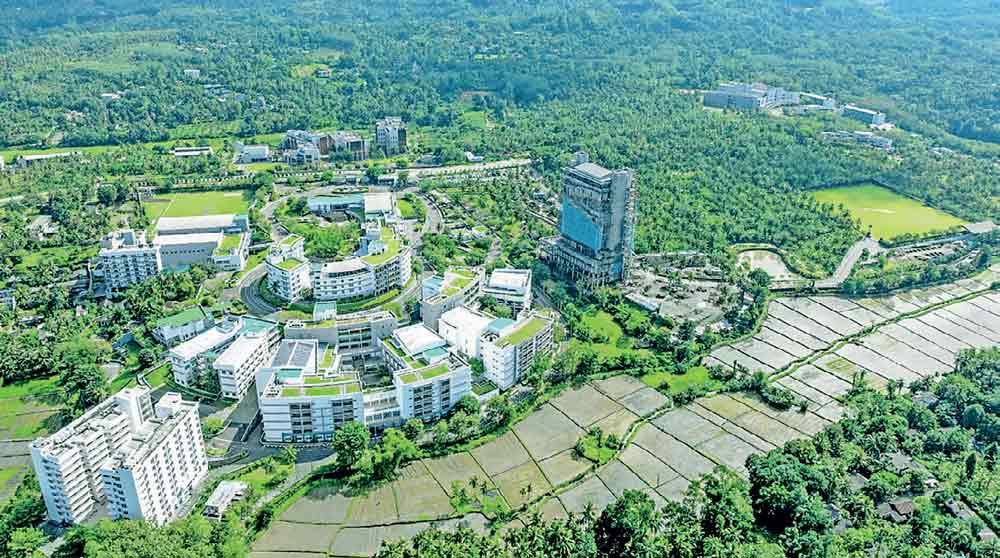
NSBM was incorporated in 2011 and commenced its early operations through the Nugegoda City Campus before opening the purpose-built NSBM Green University Town in Pitipana, Homagama in 2016. Since then, the university has expanded significantly, with its total student intake reaching more than 44,000 between 2012 and 2026 and its current student population exceeding 14,000.
From 2012 to 2025, NSBM produced 22,855 graduates, contributing to Sri Lanka’s skilled workforce across business, computing, engineering, design, science and postgraduate disciplines.
Developing Sri Lanka’s human capital
NSBM’s contribution is particularly relevant, given the continuing capacity constraints within Sri Lanka’s higher education system. Each year, a significant number of students qualify for university entrance but are unable to secure a place within the state university system, increasing the importance of credible non-state higher education pathways.
NSBM has sought not only to expand access to higher education but also to strengthen the transition from education to employment. The findings from the graduate survey undertaken as part of the assessment indicate that 86 percent of surveyed NSBM graduates are in permanent employment, while 74 percent are employed in a field related to their area of study.
The study also finds that the NSBM graduates are likely to earn more than comparable graduates within the wider university system, highlighting the potential economic value associated with industry-relevant higher education.
NSBM’s connections with industry form an important part of this approach. The university has more than 132 documented organisational partnerships and connections with approximately 1,800 industry players, supporting internships, career guidance, knowledge sharing, industry exposure and graduate employment opportunities. The institution’s contribution is also not limited to preparing graduates for employment.
Around 11.5 percent of graduates surveyed established their own businesses, reflecting the role higher education can play in supporting entrepreneurship and developing future job creators.
Retaining foreign exchange through local higher education
NSBM’s contribution also extends to Sri Lanka’s external economy. Overseas higher education can involve significant foreign exchange outflows through tuition fees, accommodation, travel and living expenses. The assessment found that 35 percent of NSBM undergraduates surveyed indicated that they would have pursued higher education overseas had NSBM not been available.
Applying this finding to NSBM’s current undergraduate population of 14,000, the study estimates that approximately 4,931 students are effectively retained in Sri Lanka, generating estimated foreign exchange savings of approximately US $ 337.8 million annually, based on the estimated first-year cost of overseas study.
Beyond reducing outward foreign exchange expenditure, retaining students locally allows a greater share of household education expenditure to circulate within Sri Lanka through spending on education, accommodation, transport, food and other services.
Looking ahead, the opportunity extends beyond retaining foreign exchange. NSBM’s international university partnerships, internationally recognised programmes and Green University positioning provide a foundation from which the institution can increasingly attract foreign students to Sri Lanka. This presents an opportunity to contribute towards positioning Sri Lanka as a regional knowledge hub while developing higher education as a source of education-related export earnings.
Transforming economy around Homagama
One of the clearest illustrations of NSBM’s wider impact can be seen in the area surrounding NSBM Green University. The establishment and continued growth of the university community in Pitipana have created sustained demand for accommodation, food, transport, retail and other services, supporting the development of a wider local economy around the campus.
The assessment estimates that student expenditure generates approximately Rs.4.2 billion in annual value creation within the Homagama area, while regional economic activity associated with NSBM supports more than 22,000 livelihoods.
Of the local businesses surveyed as part of the assessment, 67 percent were established after NSBM, demonstrating the growth in commercial activity that has taken place alongside the development of the university.
Changes in the surrounding area are also visible through land values and patterns of development. The study identifies a real increase of more than 830 percent in land values since NSBM’s establishment, while satellite-derived nighttime light data shows a substantial increase in light intensity around the campus between 2013 and 2026.
Together with the business survey findings, these indicators highlight the broader transformation of Homagama, Pitipana into an emerging education and services hub.
Building a sustainable university model
Sustainability has been an integral part of NSBM’s identity since the development of NSBM Green University. Designed as South Asia’s first Green University, the Homagama campus incorporates renewable energy, water conservation, waste management and resource-efficiency measures into its operations. The university’s 50-kW rooftop solar installation generates approximately 60,000 kWh of electricity annually, while treated wastewater meets more than 70 percent of campus irrigation requirements.
NSBM’s sustainability and social impact also extend beyond the boundaries of the campus. Between 2021 and 2026, the university has undertaken approximately 233 CSR initiatives, covering environmental conservation, education, community infrastructure and social development. These initiatives have included biodiversity conservation, tree planting, beach clean-ups, recycling initiatives, school gardens, sanitation improvements and educational support.
An impact beyond campus
Taken together, the findings of the study done by Deloitte demonstrate that the value created by a university cannot be measured solely by the number of students it educates or the degrees it awards.
NSBM’s impact is created through several interconnected channels: developing skilled graduates, creating and supporting employment, stimulating local businesses, retaining foreign exchange, encouraging entrepreneurship, supporting investment and contributing to environmental and community development.
As NSBM enters its next phase of development, this contribution has the potential to deepen further. The university’s ongoing expansion includes new academic infrastructure and the proposed NSBM Medical Research and Teaching Hospital, which is expected to broaden the institution’s contribution into healthcare education, clinical training, research and related economic activity.
NSBM’s journey also demonstrates the wider role that higher education institutions can play in Sri Lanka’s development. Universities can function not only as centres of learning but as anchor institutions that develop human capital, connect education with industry, stimulate the surrounding economies, support innovation and contribute to national economic priorities.
As Sri Lanka seeks to increase tertiary education participation, strengthen graduate employability and transition towards a more knowledge-driven economy, NSBM is positioned to play an increasingly important role in this transformation, creating value not only for its students but also for the surrounding communities and wider Sri Lankan economy.