
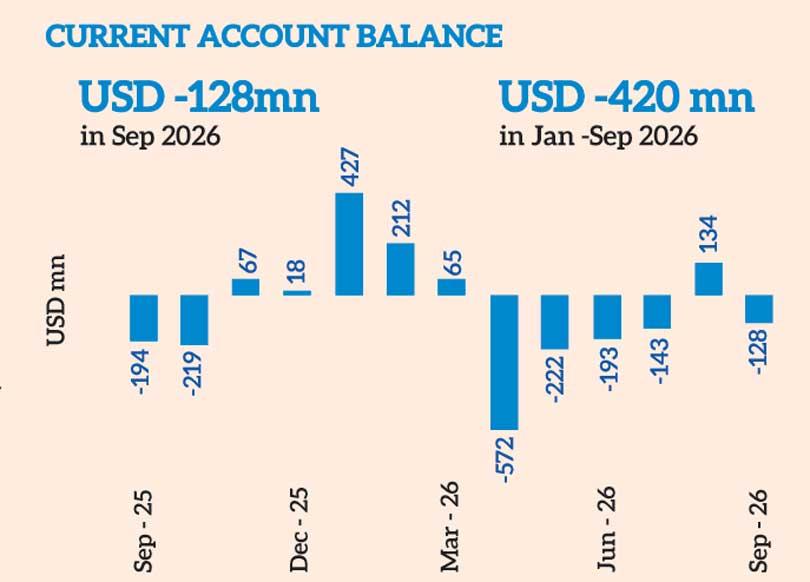
- Deficit was the smallest of the five monthly shortfalls recorded this year, with April’s revised US$ 572mn the largest
- Nine-month trade deficit widened 53% to US$ 7.9bn as import expenditure rose 21.3%, outpacing 5.3% growth in exports
- Fuel imports cost approximately US$ 4.5bn in the first nine months, up 51.5% YoY, while vehicle imports reached US$ 1.87bn
Sri Lanka’s external current account slipped back into a deficit of US$ 128 million in September, after a brief US$ 133 million surplus in August, taking the cumulative shortfall for the first nine months to US$ 420 million against a US$ 1.85 billion surplus a year earlier, Central Bank data showed.
The September deficit was the fifth recorded this year but the smallest of the five, well below the revised US$ 572 million shortfall in April, the first of the year. It was also narrower than the US$ 194 million deficit in September 2025, as a lower trade deficit and higher remittances outweighed a wider primary income deficit and a smaller services surplus.
Merchandise export earnings rose 21.0 percent year-on-year to US$ 1.38 billion during the month, the highest monthly figure on record and around US$ 75 million above the previous peak set in July 2025. The Export Development Board had earlier estimated September merchandise exports at US$ 1.39 billion. Import expenditure, meanwhile, rose a more modest 2.9 percent to US$ 2.11 billion. With exports far outpacing imports, the monthly trade deficit narrowed 19.6 percent to US$ 731 million from US$ 910 million a year earlier. However, the cumulative trade deficit widened 52.9 percent to US$ 7.91 billion during January-September from US$ 5.17 billion in the corresponding period of 2025. Import expenditure rose 21.3 percent to US$ 18.67 billion over the nine months, an increase of US$ 3.28 billion, while export earnings grew only 5.3 percent to US$ 10.75 billion.
Fuel, the largest single item in the country’s import basket, accounted for much of that increase. Cumulative fuel import expenditure rose 51.5 percent year-on-year to approximately US$ 4.5 billion during the nine months, roughly US$ 1.5 billion more than a year earlier, or nearly half of the total increase in import spending.
Fuel now makes up close to a quarter of the nine-month import bill, above the average share of around 20 percent it has held annually over the past decade, as per Central Bank data.
Monthly fuel spending has nonetheless eased, with expenditure declining for the fifth consecutive month in September. Fuel imports had peaked at US$ 886 million in April amid higher oil prices and import volumes following the outbreak of the Middle East conflict in late February, before moderating to US$ 536 million in May, US$ 465 million in June and US$ 453 million in July.