On a typical weekday morning in Sri Lanka, as commuters scroll through their phones between 8 and 9 AM, a silent competition unfolds. Brands, both established and emerging, are vying for attention—one post, one video, one message at a time. By lunchtime, the competition intensifies, and by evening, it reaches its peak. In this fast-moving digital landscape, one question defines success: where should brands show up to truly matter?
The answer, for now, is clear.
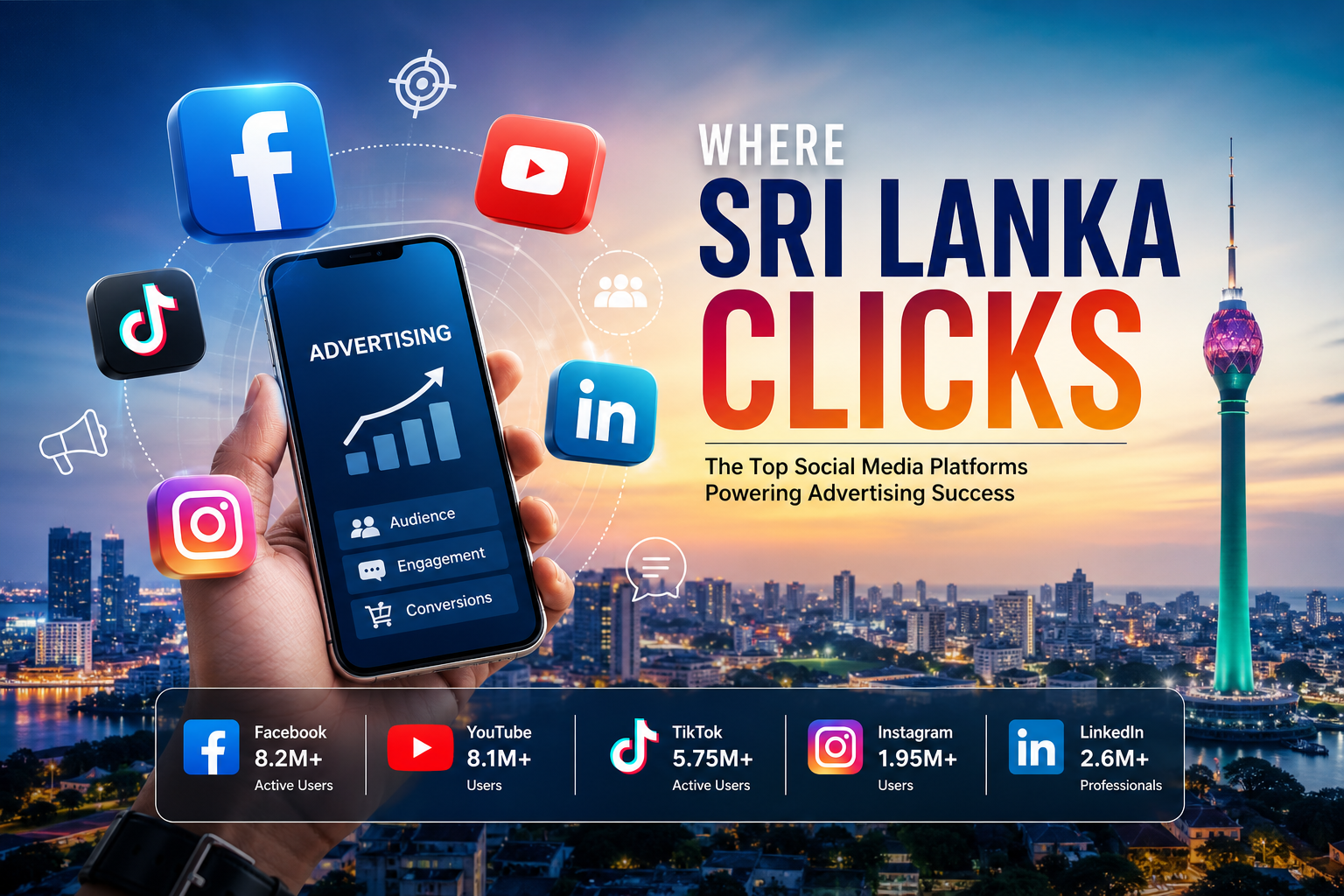
At the centre of Sri Lanka’s digital advertising ecosystem stands Facebook—often referred to as Meta’s flagship platform and, more importantly, the country’s most dominant digital marketplace. With over 8.2 million active users and an overwhelming market share exceeding 92%, Facebook has evolved far beyond a social networking site. It is where consumers discover, evaluate, and often decide. In fact, nearly two-thirds of users encounter new brands here, making it the most powerful entry point for awareness and engagement.
Yet, the story of digital advertising in Sri Lanka is not a one-platform narrative. It is a layered ecosystem where each platform plays a distinct strategic role.
Take YouTube, for instance. With more than 8.1 million users, it has become the country’s video marketing powerhouse. In a culture that increasingly values visual storytelling, YouTube offers brands the ability to connect through narrative, emotion, and demonstration. An impressive 90% of users report discovering brands through video content—an indicator of how deeply video has embedded itself into consumer behaviour.
Meanwhile, the rise of TikTok signals a generational shift. With over 5.75 million users, the platform thrives on creativity, spontaneity, and cultural relevance. It is not just about advertising—it is about participation. Brands that succeed here are those willing to adapt to trends, embrace humour, and tell stories in seconds rather than minutes. For engaging Gen Z audiences, TikTok is no longer optional; it is essential.
In contrast, Instagram caters to a more curated experience. With close to 2 million users, it serves as a visual portfolio for brands—particularly those in lifestyle, fashion, travel, and hospitality. Here, aesthetics matter. Every image, every reel contributes to a brand’s identity, shaping perception through consistency and visual appeal.
Then there is LinkedIn, often overlooked in mainstream conversations but critical for business-to-business engagement. With over 2.6 million professionals, it provides a space where corporate storytelling, employer branding, and strategic partnerships take precedence over mass appeal.
What distinguishes successful brands in Sri Lanka today is not merely their presence on these platforms, but how intelligently they use them.
A growing number of businesses are building dedicated Facebook Pages, integrating Messenger for direct customer interaction, and running highly targeted advertising campaigns across Facebook and Instagram. Influencer collaborations are becoming more structured, shifting from vanity metrics to measurable impact. On TikTok, storytelling has replaced traditional advertising, while YouTube continues to reward brands that invest in quality video content.
Timing, too, plays a crucial role. Local engagement patterns reveal that audiences are most responsive during three key windows: early mornings, midday breaks, and evenings—particularly from Tuesday through Thursday. Aligning content with these behavioural rhythms can significantly influence campaign performance.
Equally important is the format. Static posts, while still relevant, are steadily уступed by video content, which consistently delivers higher engagement rates. Whether it is a short TikTok clip, an Instagram reel, or a YouTube feature, video has become the language of digital persuasion.
Behind many of these successful campaigns are specialised agencies such as Elegant Digital Solutions (Pvt) Ltd., Marketing Chrome, Konnetor, and Iron Roots. Their role extends beyond content creation; they interpret data, refine targeting strategies, and ensure that every campaign aligns with business objectives.
The broader insight is this: digital advertising in Sri Lanka is no longer about being present everywhere. It is about being relevant in the right place, at the right time, with the right message.
As the country continues to embrace digital transformation, brands face an evolving challenge—not just to capture attention, but to sustain it. Platforms will change, algorithms will shift, and user preferences will evolve. But the underlying principle remains constant: those who understand their audience, respect their time, and communicate with clarity will always lead the conversation.
And in a world where every scroll counts, that leadership makes all the difference.