

You’ve been counting down to that summer getaway for weeks: a warm destination, a comfortable sun lounger, a good drink and, of course, a book to keep you company. Now, with the airport, train station or long road trip standing between you and your holiday, there’s just one question: what does the book you packed reveal about you?
According to Edgar Dubourg, a cognitive scientist at the École Normale Supérieure in Paris, the choice is rarely as random as it might seem.
“Our reading list is basically a map of our personality,” he suggests, arguing that the genres we gravitate towards can reflect deeply rooted psychological preferences.
Whether you reach for a thriller, romance, horror story or science-fiction novel, your choice may be connected to instincts and emotional patterns that already exist within you. Fiction does not necessarily create new emotions; instead, it can activate feelings and motivations that are already part of our psychology.
Research has increasingly explored the relationship between reading preferences and personality, suggesting that the genres we choose may offer clues about what excites us, comforts us or triggers particular emotions.
Psychologist Dr Valerie van Mulukom, a senior lecturer at Oxford Brookes University, has also examined how underlying anxieties or what she describes as “existential insecurities” can influence the types of stories people are drawn to.
In her research, different reading preferences were grouped into four broad categories based on the genres people were most likely to engage with:
- Epic adventures and other worlds: action, adventure, science fiction, dystopian and post-apocalyptic fiction, and fantasy
- Everyday life and relationships: comedy, romance, drama, family stories and musicals
- Threat and danger: true crime, crime, mystery, thrillers and horror
- Facts and history: documentaries, biographies and historical works
But what do these categories actually tell us about the people who choose them? And could the books we pack for a holiday reveal more about our fears, desires and personalities than we realise?
Can’t resist a murder mystery? You’re probably intrigued by danger
If crime fiction is your go-to genre, your reading choices could point to a particular fascination with danger, uncertainty and the darker side of human behaviour.
And it isn’t necessarily limited to traditional detective stories or psychological thrillers. The category can stretch from true-crime accounts and espionage novels to supernatural horror, including the works of writers such as Stephen King.
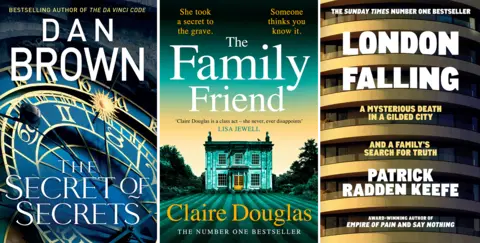
Several titles currently appearing on UK bestseller lists fall within the “threat and danger” category identified in the research, including:
- The Secret of Secrets by Dan Brown
- The Family Friend by Claire Douglas
- London Falling by Patrick Radden Keefe
Beach bag full of romance novels? You likely worry about your relationships
On the other hand, if romantic fiction is the genre you reach for most often unlike me, admittedly the research suggests your underlying concerns may centre more around relationships. These can include both romantic and friendships, as well as how you view social standing, acceptance and the way others perceive you.
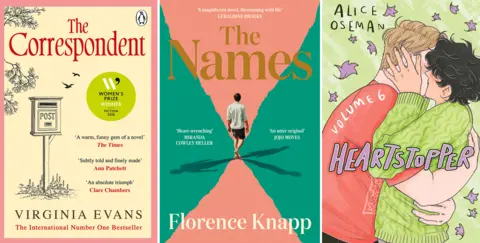
Several books on the UK bestseller lists fall into the study’s “everyday life and human relationships” category, including:
- The Correspondent by Virginia Evans
- The Names by Florence Knapp
- Heartstopper Volume 6 by Alice Oseman
Spending summer in Westeros? You may be someone who worries about humanity’s future
At the other end of the spectrum, readers who gravitate towards fantasy and science fiction may be more preoccupied with larger concerns about the world around them.
So, if your holiday reading list finally includes the Game of Thrones novels a world packed with political power struggles, medieval conflict, dragons and undead armies the research suggests you may also be someone who thinks deeply about issues such as climate change, global instability or the possibility of war.
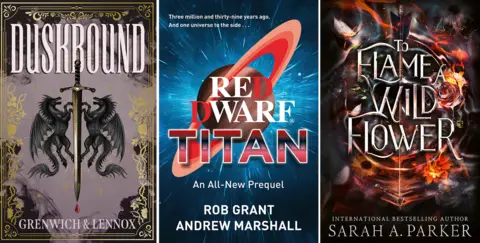
The UK bestseller charts currently feature several books that fall within the study’s “epic other-world adventures” category, including:
- Duskbound by Bree Grenwich and Parker Lennox
- Red Dwarf: Titan by Rob Grant and Andrew Marshall
- To Flame a Wild Flower by Sarah A. Parker
Prefer non-fiction? You might be searching for answers rather than adventures
When it comes to holiday reading, I tend to take the job rather seriously. On my last trip overseas, I packed eight books for a three-week break, with everything from Frank Herbert’s science-fiction classic Dune to James Ellroy’s dark noir novel The Black Dahlia making the journey with me.
But fictional worlds aren’t for everyone. Perhaps you would rather spend your time reading a memoir, biography or a book about history.
According to Dr Dubourg, the important factor isn’t necessarily whether a story is factual or fictional. What matters is our attraction to narratives themselves.
Humans, after all, are surrounded by stories in almost every aspect of life from news reports and personal experiences to the anecdotes shared within our communities.
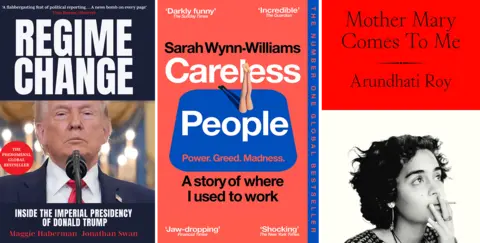
The UK bestseller lists currently include several books that fit into the research’s “facts and history” category, including:
- Regime Change by Maggie Haberman and Jonathan Swan
- Mother Mary Comes to Me by Arundhati Roy
- Careless People by Sarah Wynn-Williams
So, the next time you reach for a book, don’t dismiss your choice as a simple matter of taste. The story that catches your attention might reveal something about the fears, desires and emotions quietly shaping the way you see the world. After all, your holiday reading list may be telling you far more about yourself than you realise.