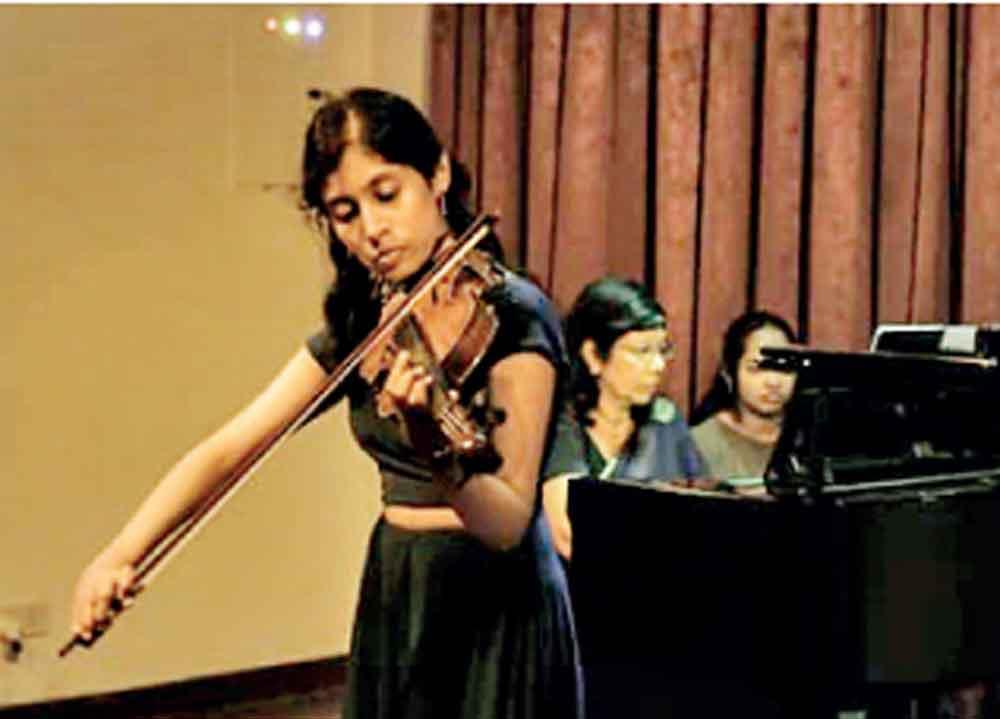
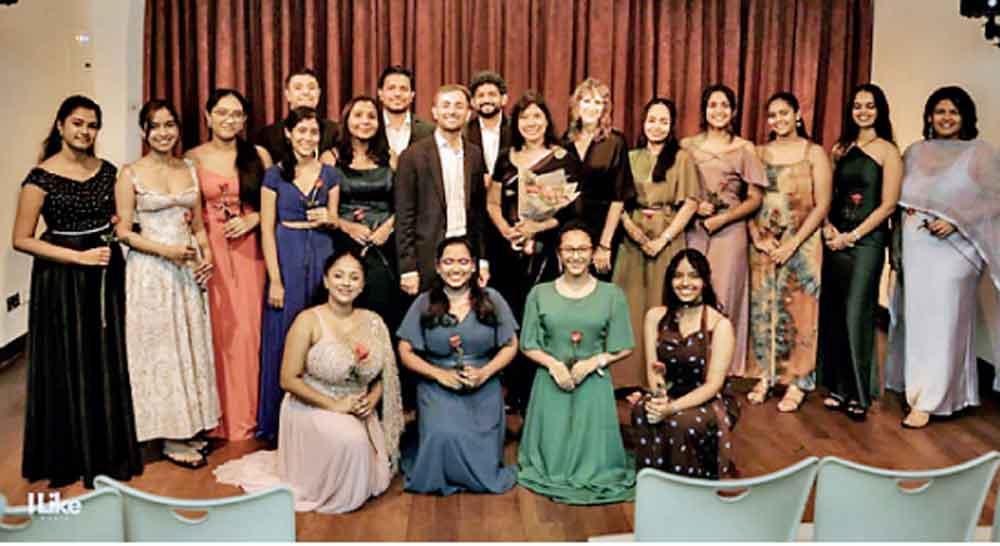
The elegant surroundings of the Alliance Française de Colombo provided the setting for an evening devoted to some of the world’s most enduring classical music, as the Menaka Singers Opera Ensemble presented A Night at the Opera.
Led by Menaka de Fonseka Sahabandu, the ensemble brought together Sri Lankan vocalists and instrumentalists for a programme spanning opera, art song and chamber music. The concert was held in collaboration with the Embassy of Italy in Colombo, creating an evening that combined musical performance with a celebration of cultural connections.
Held at the Alliance Française premises on Barnes Place, the concert offered a more intimate alternative to the traditional opera-house experience. Rather than placing the performers at a distance, the venue created an atmosphere in which the audience could experience the voices and instruments at close range.
The collaboration between the Alliance Française and the Italian Embassy also added another dimension to the event. French and Italian cultural traditions came together with Sri Lankan performers, demonstrating how artistic partnerships can create spaces where different cultures meet naturally.
At the centre of the performance was an extensive group of Sri Lankan singers, representing a range of vocal styles and registers. The ensemble featured mezzo-sopranos, baritones, tenors and sopranos, with performances by Joanne Rajiyah, Laknath Seneviratne, Wasantha Geekiyanage, Dmitri Gunatilaka, Ravindu Perera, Jehani Gamalathge, Eshani Pathmaperuma, Hiruni Perera, Tharuka Kularatna, Anagi Sathischandra, Sneha Perera and Binudi Kahanda.
They were joined by Tiyanie Sahabandu on violin and Mihika Jayasena on cello, while the chorus featured Angel Sri Ranjan, Mineli Rodrigo, Nilinya Fernando and Sakithma Gunaratna.
Together, the musicians created a full and varied sound that extended beyond the traditional recital format. The combination of solo performances, duets and ensemble numbers allowed the programme to move between intimate moments and larger, more dramatic passages.
The repertoire reflected the remarkable breadth of Western classical music. Mozart was represented through selections from Don Giovanni and The Marriage of Figaro, alongside Exultate Jubilate. Puccini added some of the evening’s strongest expressions of Italian romanticism with pieces from Madama Butterfly, La Rondine and Gianni Schicchi.
Works by Verdi, Donizetti, Bizet and Massenet further expanded the programme, bringing contrasting moods and theatrical styles to the stage. The selection also moved beyond opera, with music by Bach and Schubert providing more reflective moments.
One of the memorable pieces was Dvořák’s Song to the Moon, while Brahms’ Scherzo offered an instrumental interlude that placed the violin in the spotlight. Bizet’s Pearl Fishers Duet demonstrated the expressive possibilities of two voices working in close harmony.
The programme eventually moved from the grand traditions of European opera to the distinctive emotional world of French chanson. The concert concluded with Édith Piaf’s Hymne à l’amour, bringing the evening to a deeply emotional close.
That final choice also reinforced the broader character of the concert. Although the programme drew heavily from European musical traditions, its performance in Colombo by Sri Lankan artists gave the works a different setting and context.
For the performers, the concert represented more than an opportunity to reproduce works from the established classical repertoire. It demonstrated the depth of vocal and instrumental talent available within Sri Lanka and the ability of local musicians to engage confidently with some of the most demanding works in the Western classical tradition.
Opera is often associated with historic European theatres and centuries-old musical institutions. Yet the evening at Barnes Place offered a different perspective. These works, composed in countries including Italy, France, Austria and Germany, continue to travel across borders because their emotional themes remain understandable regardless of geography.
Love, jealousy, humour, heartbreak, longing and devotion formed the emotional thread running through the programme. The audience was therefore not simply presented with a collection of famous compositions, but with stories and emotions capable of crossing cultural and linguistic boundaries.
The partnership between the Embassy of Italy and the Alliance Française further strengthened that idea. Instead of cultural exchange being expressed through formal ceremonies, it took place through music, with artists and audiences sharing an experience shaped by several different cultural traditions.
By the end of the evening, A Night at the Opera had become more than a showcase of classical repertoire. It was a demonstration of how music can connect artistic traditions separated by geography and history while giving them new life through local performers.
The Menaka Singers Opera Ensemble’s Colombo performance showed that opera does not need to be confined to the great stages of Europe to have an impact. With skilled performers, a receptive audience and a willingness to bring different traditions together, the music can resonate just as powerfully in Sri Lanka.
At the Alliance Française that evening, European classical music found a distinctly Sri Lankan stage — and a new audience ready to listen.